Lead
Lead the site. Do not rebuild it every Friday.
Principals already lead. The tools do not. Every cycle, the same material is rebuilt by hand: priorities in one doc, policies in another, compliance in a fourth, staff actions in a notebook. Lead is the operating layer that holds the five things a Principal actually does, so leading the site stops costing eleven hours a fortnight.
One direction layer. Five things the role already carries. Set once, read by every tier.
Promise 1 of 3
Eleven hours a cycle. Four places the same data lives. Nothing authoritative.
The Invisible Labour research (SASSLA and Monash, 2024) named the friction cost directly: a Principal loses roughly eleven hours every council cycle consolidating material by hand. The sector bought tools that manage documents. None of them hold the decision-to-action chain. The Principal does, in their head, at night, after the bell.
Promise 2 of 3
Five capabilities. One leadership layer. Everything the role already carries, finally held by the tool.
Lead is organised around the five things a Principal, Deputy or Council Chair actually does when they sit down to lead: they run the cycle, they set priority, they hold compliance, they author the procedure, they close the action. Each capability below is a working artefact inside Lead, not a marketing tile.
Promise 3 of 3
Lead runs your next council cycle in 14 days.
Day 1: scoping call with your last three council packs.
Research anchor
The administrative load on Principals is not incidental. It is a measurable driver of harm, and it is invisible to every tier above the site.
What Lead changes
The measurable shift at site level.
- Time reclaimed per council cycle
- 11 hrs
- Council pack the chair actually reads
- 1 page
- From first call to next pack live
- 14 days
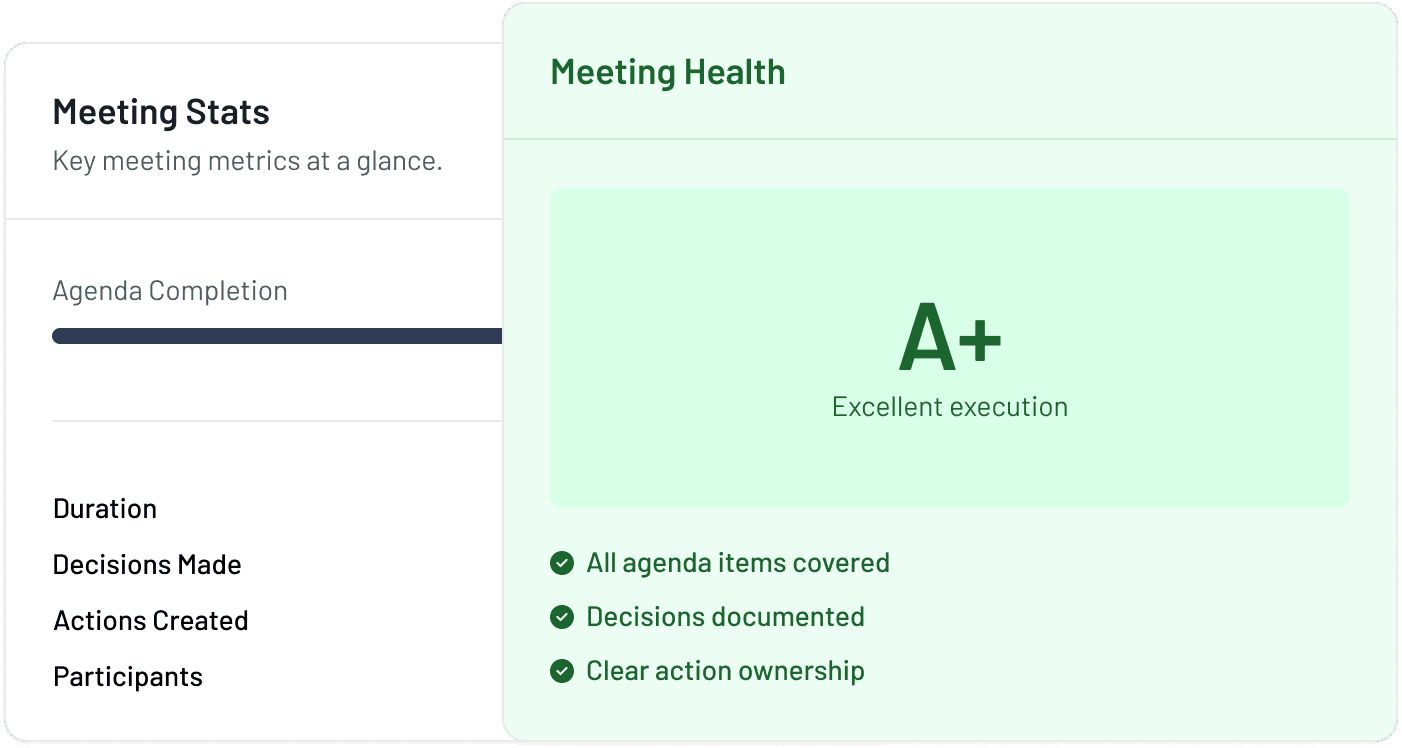
Pack consolidation drops from eleven hours to ninety minutes.
Plain English, ten-minute read, composed from live site data.
No migration project. No rebuild. Your next meeting runs in Lead.
Eleven hours a cycle. Four places the same data lives. Nothing authoritative.
The Invisible Labour research (SASSLA and Monash, 2024) named the friction cost directly: a Principal loses roughly eleven hours every council cycle consolidating material by hand. The sector bought tools that manage documents. None of them hold the decision-to-action chain. The Principal does, in their head, at night, after the bell.
Lead is not a board portal. It is not a document library. It is the layer that holds meetings, strategy, compliance, procedures and staff actions in one live chain, so direction set at the site is read by the Council, the Director and the Department without re-keying.
- Council priorities are out of date inside a fortnight of planning day.
- Policies are approved, filed, then never used when the decision comes.
- Directors re-ask for direction the site already set.
- Staff actions sit in four notebooks and one memory.
The Shift
When five things the role already does are held in one layer, leading the site stops being reconstruction and starts being leadership.
Five capabilities. One leadership layer. Everything the role already carries, finally held by the tool.
Lead is organised around the five things a Principal, Deputy or Council Chair actually does when they sit down to lead: they run the cycle, they set priority, they hold compliance, they author the procedure, they close the action. Each capability below is a working artefact inside Lead, not a marketing tile.
Run Meetings
One council cycle, held end-to-end by the cadence, not by the Principal's memory.
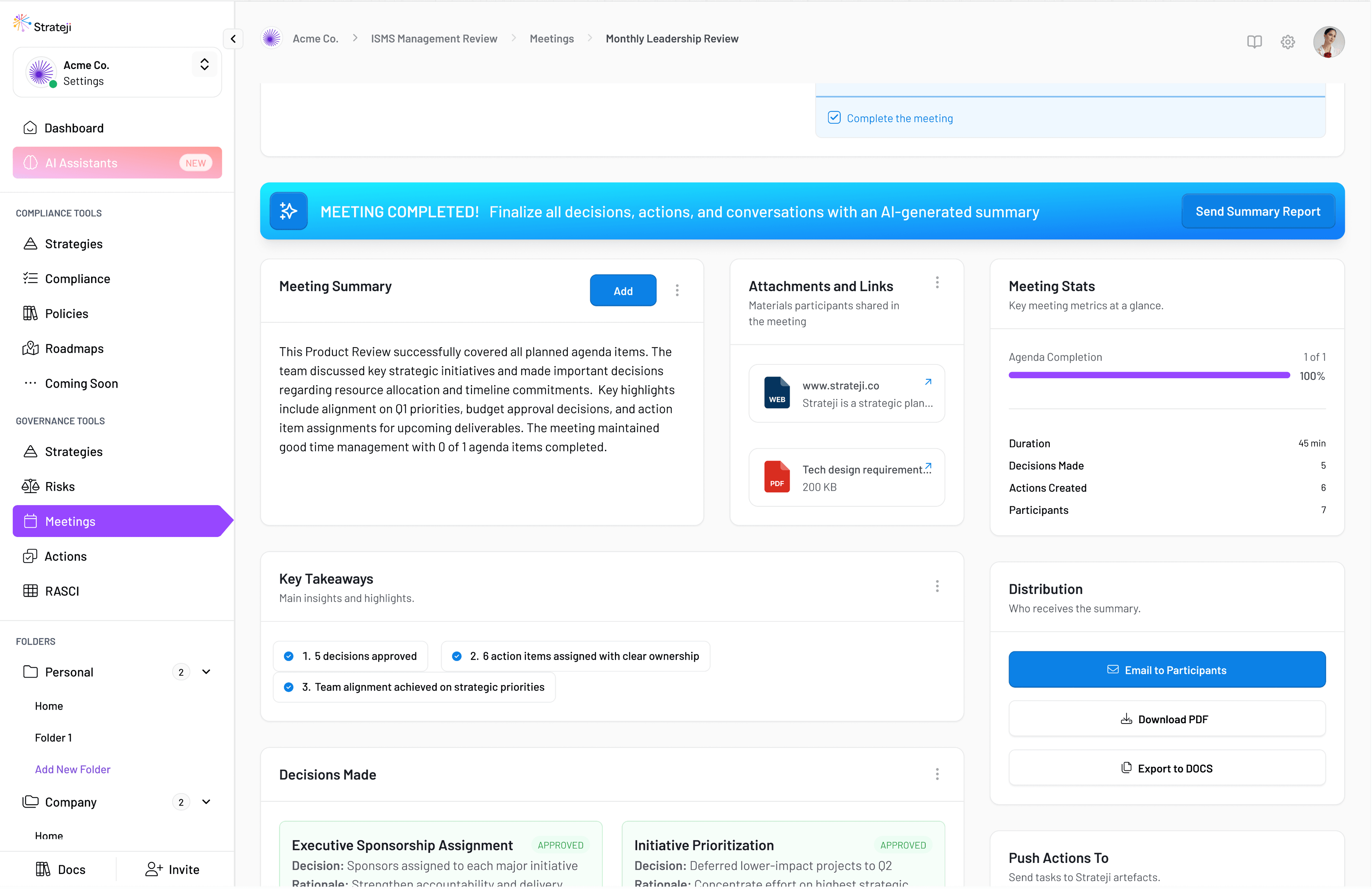
A council cycle is not a meeting. It is six weeks of preparation, one evening in the room, and eight weeks of follow-through that the sector currently loses inside minutes no one re-reads. Lead runs the cycle as a living timeline: the pack composes itself from live site data, the agenda is the meeting, decisions are captured where they are made, actions close out in the next cycle, and the chair reads plain English without a glossary. Eleven hours a cycle drops to ninety minutes. The Council stops re-asking for what the site already set.
Set Strategy
Annual priorities that survive Week 3, because the term reads them, the meeting references them, and the Director sees them.
Site strategy in the sector lives in a PDF no one opens after planning day. Lead holds strategy as a live pyramid: two or three annual priorities, decomposed into term objectives and measurable KRs, each owned by a named leader, each visible in the Council pack without reconstruction. When a decision is made in a meeting, it lands against the priority it serves. When a Director reads the site, they read the same pyramid the Principal is running from, not a re-typed summary.
Priority 1. Literacy growth across Year 3 to 6.
Council-approved annual priority. Runs across three terms with owned KRs.
Measure: Band 5 reading growth +12% by end of Year.
KR. Term 2 intervention cycle delivered at fidelity.
Decomposed from Priority 1. Visible in Council pack without re-reporting.
Measure: 12 of 14 intervention cycles completed to protocol.
KR. Staff coaching aligned to literacy priority.
Linked to staff actions. Not a separate HR thread.
Measure: 8 of 10 coaching cycles completed by Week 8.
KPI. Council confidence in site direction.
Plain-English signal to the Council chair.
Measure: Chair rates pack comprehensibility 4/5 or higher.
Strategy is a pyramid of Priority, Objective, Key Result, not a deck. Every item points to the meeting, the owner and the evidence underneath.
Hold Compliance
Every obligation the site owns, held as a lifecycle, not a reminder in an inbox.
Compliance in public schools is not a library problem. It is an ownership problem. A Principal holds hundreds of obligations across SA DfE, ESB, federal Child Safe Standards and state duty-of-care. Lead makes each obligation a named lifecycle: the obligation is required, owned, evidenced, reviewed, closed. When a review is overdue, it is visible before it becomes an audit finding. When the Business Manager changes roles, the lifecycle does not walk out with them.
Required
Pre-loaded obligation with legislative source, review cadence and default owner.
Owned
A named leader accepts accountability. Ownership is visible to Council and Director.
Evidenced
Evidence attached where the work happens, not in a SharePoint rebuild on review morning.
CurrentReviewed
Review completed at cadence. Notes captured. Next review date auto-queued.
Closed
Closed for the cycle. Visible to Department, available to Coroner or Ombudsman.
Aligned to the Education and Children's Services Act (SA), ESB council expectations and federal Child Safe Standards. Same lifecycle, configured per jurisdiction.
Author Procedures
Policies and procedures authored once, linked to the obligations they satisfy, adopted system-to-site.
The sector buys policy libraries and calls the problem solved. The library is not the problem. Use at the site is the problem. Lead holds procedures as a living register. Each procedure is authored at the site (or adopted from the Department), linked to the obligations it satisfies, linked to the risks it controls, owned by a named leader, reviewed on cadence. A Principal does not write procedures to file them. They write them so the site reads them when the decision comes.
| Procedure | Owner | Satisfies | Status | Review |
|---|---|---|---|---|
Incident response, critical.Linked to 4 risks, 2 obligations. | Deputy | ESB §4.2, SA DfE ICP. | Approved | Q3 FY26 |
Excursions and camps authorisation.Adopted from Department; tailored. | Business Mgr | SA DfE EX-01, DoC framework. | In review | Due Wk 6 |
Child safe behaviour management.Linked to 6 risks, mandatory training. | Principal | Federal CSS §3, §7. | Approved | Q4 FY26 |
Complaints and feedback.Council-facing; plain English. | Principal | ESB §6.1. | Draft | Q2 FY26 |
Staff capability and coaching.Links to Strategy pyramid (Priority 1). | Deputy | Internal standard. | Overdue | Wk −2 |
Procedures compose from live site data. The same procedure that sits in the pack is the one the Deputy reads on a Monday morning.
Close Actions
One action register across every meeting, every review, every forum.
Staff actions today are spread across four notebooks: senior leadership, council, curriculum, operations. None of them see the others. Lead holds one action register across every forum, with promotion logic built in. An idea in the corridor becomes an action against a priority, an at-risk action becomes a risk entry, a pattern of actions becomes a procedure change. Nothing stays verbal. Nothing lives only in the Principal's head. The Deputy runs operating rhythm from a single register.
Rebuild the Yr 3-6 literacy pacing guide with the Literacy Lead.
Confirm consent pack for Wk 8 camp.
Coaching cycle 4, Year 4 team.
Draft complaints response for Council pack.
OHS walkthrough blocked by contractor hold-up.
Yr 5 intervention cycle signed off.
Council policy for critical incident response.
Actions promote to where they belong. A blocked contractor walkthrough becomes a live risk. A repeat action becomes a procedure change. A measurable coaching cycle becomes a KPI.
What a Governing Council is actually asking the Principal for, and why current tools keep failing them.
| Capability | Spreadsheets & Email | Department-Built Tools | Independent-School GRC (CompliSpace) | Board Portals (BoardPro / Diligent) |  |
|---|---|---|---|---|---|
| Live Council snapshot a volunteer chair reads in 10 minutes | Manual consolidation every cycle | Not built | Board-style, not council-style | Meeting-centric only | Live, plain-English, cycle-over-cycle |
| Compliance lifecycle owned at site and visible to Council | Tracked in a sidecar file | Published, not owned by the site | Yes | No | Yes, with council-facing view |
| Strategic priorities linked to term-by-term KRs | Disconnected documents | Framework only | Partial | No | Yes, with term cadence |
| Procedures linked to the obligations and risks they satisfy | Not possible | Partial | Yes | Not applicable | Yes, bidirectionally |
| One action register across every forum, not just one meeting | Four notebooks | No | Partial | Meeting minutes only | One register, all forums |
| Designed for volunteer Governing Councils | No | No | No | No | Yes, at the design level |
| Director portfolio-level visibility into site direction | None | None | Not applicable | None | Live, read-only by default |
Lead is not a meeting tool, a document library or a policy product. It is the layer that ties those three together at site level, and makes the result visible to the tier above. That is the job the sector has been paying Principals to do in their head.
Frequently asked
Frequently asked questions
Lead supports everyone the role touches.
Who we help

Principals
A direction layer the role is held to, not one the Principal carries alone.

Deputy Principals
The scaffolding you carry in your head, now held by the tool.

Governing Councils
Oversight you can actually hold: plain-English, cycle-over-cycle, no re-reading the pack.

Education Directors
A view into site direction you could not see before: live, read-only, no re-ask required.
Why EthosGov
TrustWhy the sector should trust Lead.
Aligned to the Education and Children's Services Act (SA), ESB council expectations and Australian public-school governance frameworks.
Built on the Invisible Labour evidence base (SASSLA and Monash, 2024). The first category layer whose design goal is Principal load reduction, not load addition.
ISO 27001 aligned, Australian hosted, WCAG 2.1 AA, procurement-ready with role-based access by design.
Frequently asked questions
What is public school leadership software?
It is the layer that connects council direction, strategic priorities, compliance, procedures and staff action into one governance system for a public school site.
How is this different from a board portal?
Board portals run meeting mechanics. Lead runs the decision-to-action chain and the pack composition that councils rely on. That is the work sitting outside the meeting room.
Can it scale from one site to a director portfolio?
Yes. Sites can deploy standalone, and director-level views can be activated progressively as more schools come online.
We already have a council pack process. What changes?
The pack remains. What changes is the consolidation effort behind it. Lead composes the pack from live site data so the Principal is not rebuilding it by hand every cycle.
Our council is volunteer. Will this add complexity?
No. Council views are plain English and intentionally short, with detail available underneath when needed. A volunteer chair should read the pack once, understand it, and arrive ready.
Do we have to replace our current meeting tool?
No. Lead can sit upstream of existing tools and still provide decision and action continuity. The mechanics of a meeting are not where the sector is losing hours.
Is this another system to maintain?
No. Lead becomes the single governance layer by replacing fragmented trackers and reconnecting work already being done, not by adding a fifth place data has to live.

Inside Lead
Five surfaces you can actually see.
Lead is not a marketing tile. It is five working capabilities. These are the screens Principals run from, not mocks.
Cycle-view dashboard 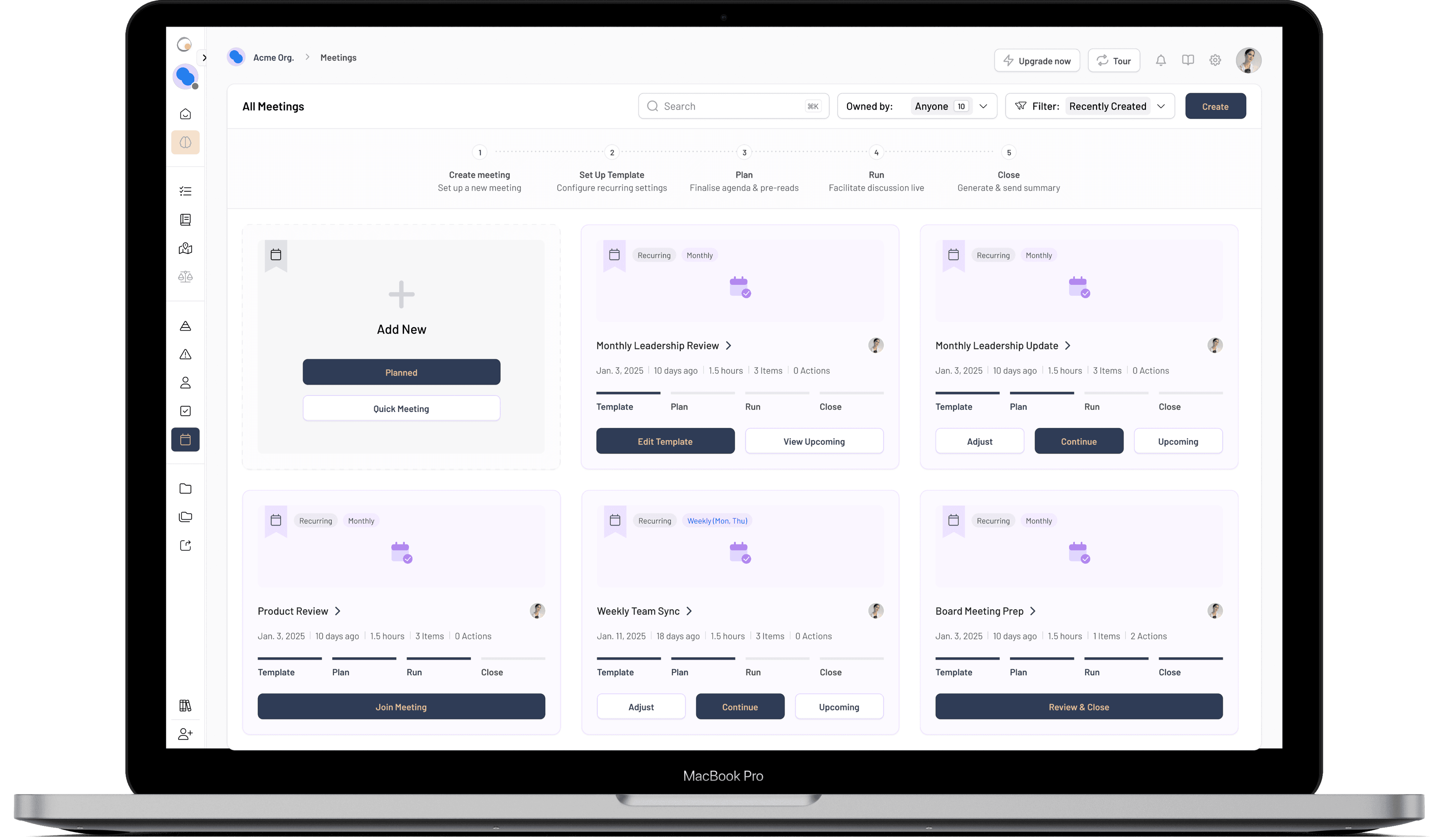
Strategy pyramid 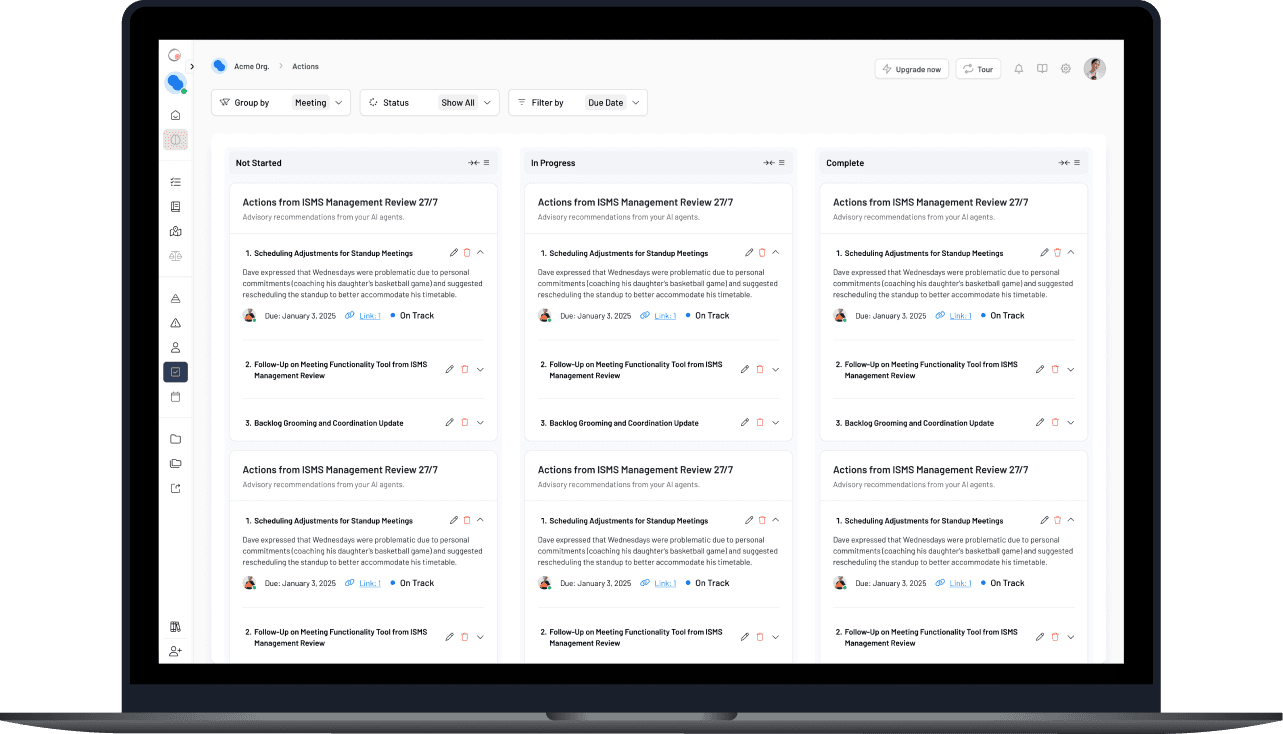
Council pack, live 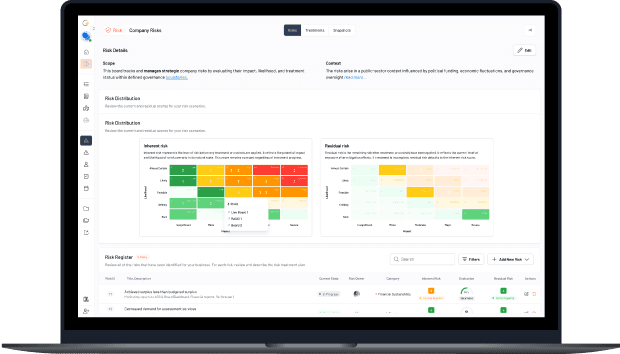
Risks the meeting sees 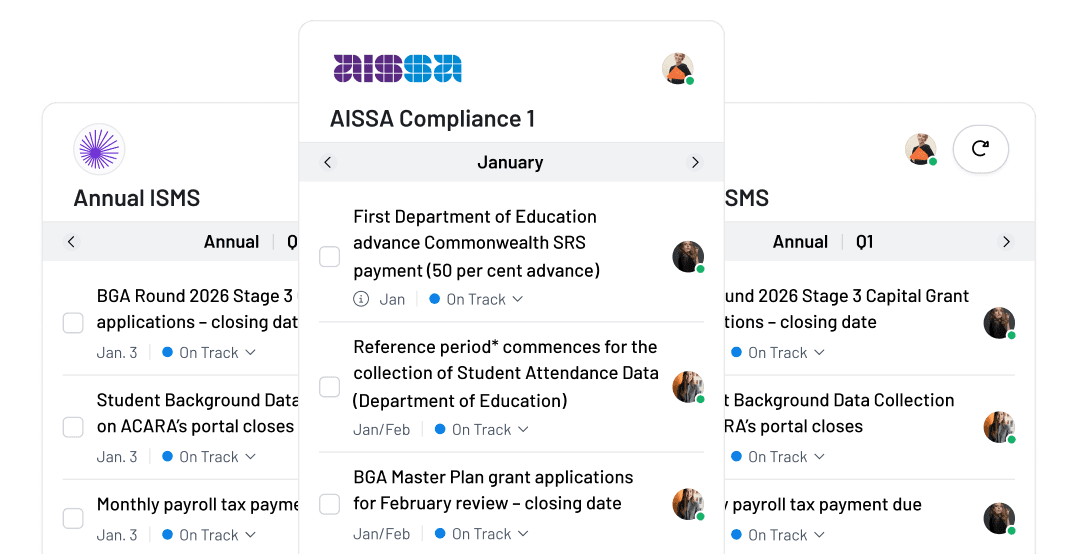
Compliance that reads itself
Go deeper
Read the thinking behind Lead
The research and design principles that shaped the Lead layer. Start with Invisible Labour, then follow the thread.
- LeadArticle
Invisible Labour: naming the burden
The SASSLA and Monash research that gave the sector the language for what Principals already knew.
Read more
- LeadArticle
Leading a public school with less friction
What the role looks like when the tool carries the chain.
Read more
- LeadArticle
The council pack your volunteers can actually read
Designed for the weakest reader: the volunteer chair. One page. Ten minutes.
Read more
- LeadArticle
Rethinking the role of the Principal
The SASSLA and SASPA joint paper called for a redesign. Lead is the software response.
Read more
The wedge promise
Your next council pack, built in Lead. Fourteen days.
No migration. No all-staff rollout. Replace the rebuild cycle for one artefact, see whether it is worth doing across the other two.
Day
Day 1
Governance Review with your last three packs.
Day
Day 4-10
Pack, pyramid and register loaded into Lead.
Day
Day 11-12
Principal walkthrough. You refine. You decide.
Day
Day 14
Next Council meeting runs from Lead.